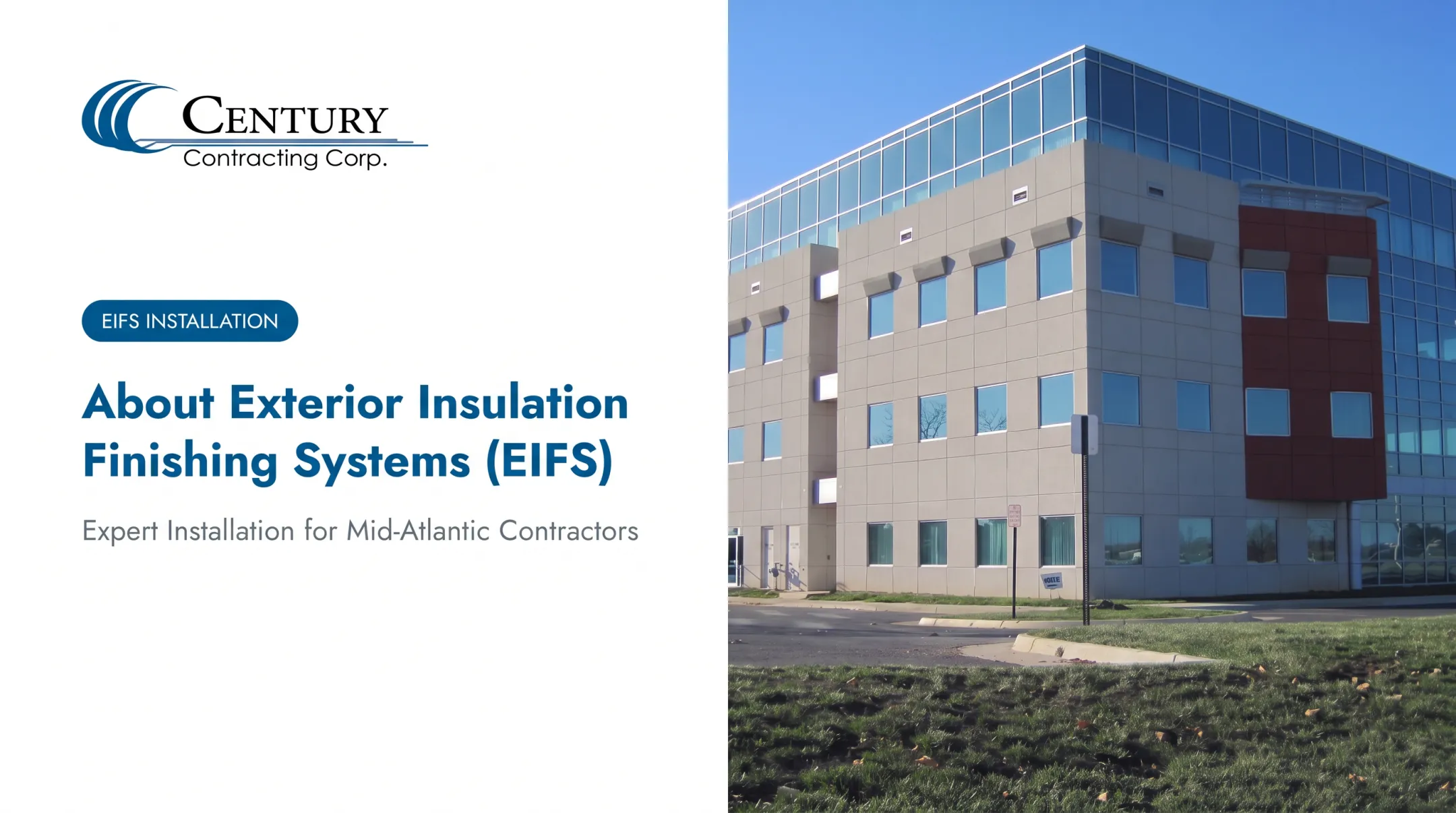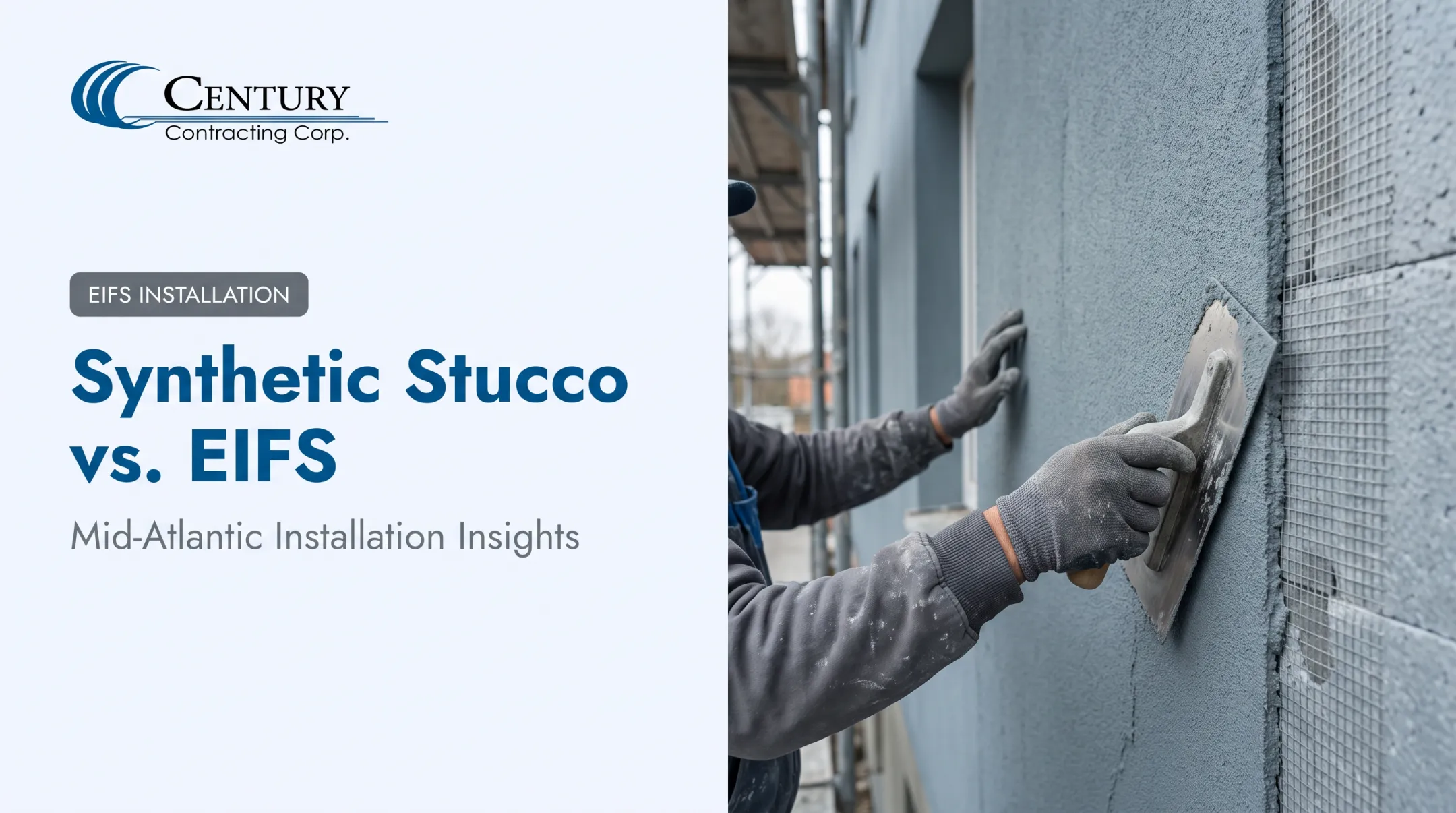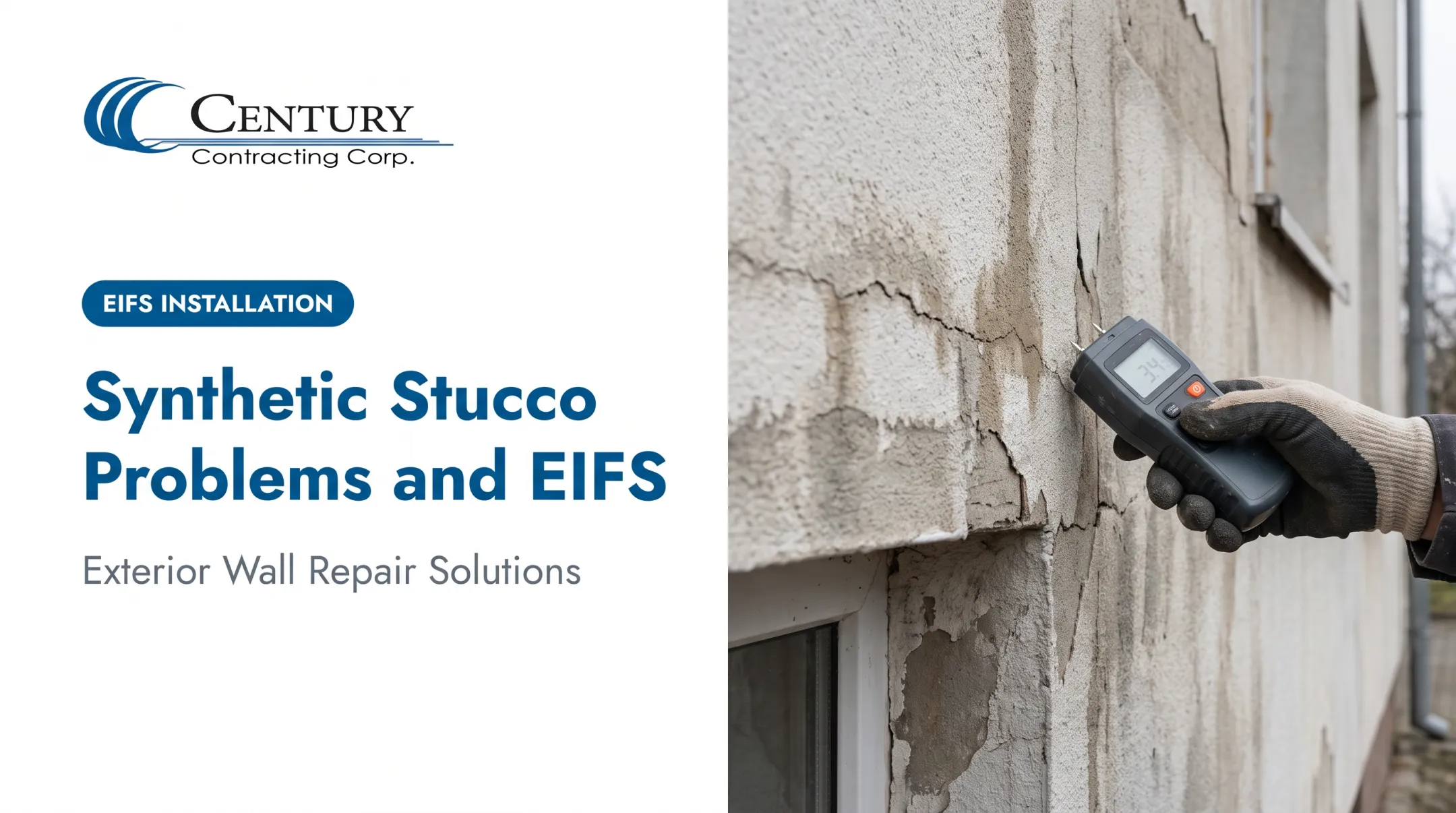

The distinction isn't academic. Synthetic stucco can describe an acrylic-based finish coat, an EIFS finish layer, or—less precisely—an entire EIFS wall system. Confuse these terms, and you risk assuming a finish coat handles moisture management or insulation performance it was never designed to provide.
This guide breaks down finish types, texture options, how synthetic stucco compares to traditional cement stucco, and what to look for in a qualified installer. Along the way, we'll flag the decisions that actually move the needle: appearance, texture depth, moisture control, impact exposure, maintenance, and compatibility with the specified wall assembly.
Key Takeaways
- Synthetic stucco uses acrylic or polymer-modified materials for more flexibility than cement finishes.
- EIFS is a multi-layer assembly; synthetic stucco is typically only the visible finish coat.
- Texture drives repair visibility, cleaning ease, and dirt retention—not appearance alone.
- Assembly design beats product name: substrate, exposure, codes, and installer experience decide fit.
What Is Synthetic Stucco? Materials, Finish Coats, and EIFS
Synthetic stucco is an acrylic- or polymer-based exterior finish. It can be applied over a conventional stucco base coat, or it can serve as the outer finish layer of a complete EIFS assembly. Those are two different applications, and treating them as identical leads to bad assumptions about insulation, drainage, and moisture control.
The EIFS Industry Members Association defines EIFS as non-load-bearing exterior wall cladding—insulation board attached to a substrate, a reinforced base coat, and a textured protective finish coat. The drainage version, now the industry standard, adds an air/water-resistive barrier and a way to redirect incidental water away from the wall assembly. An acrylic finish applied over some other substrate does not make that wall "EIFS."
The Typical EIFS Layer Sequence
Reading from the inside out, a drainage EIFS assembly generally includes:
- Substrate and an air/water-resistive barrier, which control air movement and manage incidental moisture
- Insulation board or mineral wool, providing continuous insulation
- Reinforcing mesh embedded in a base coat, which protects against impact and cracking
- Finish coat, the textured, colored acrylic surface everyone sees

Actual components, thicknesses, attachment methods, and drainage provisions vary by manufacturer. Always confirm against the selected system's tested and approved specifications, not a generic description.
What's in the Finish Coat
Acrylic binders, aggregates, pigments, and additives determine flexibility, color, texture, water resistance, vapor behavior, and weathering resistance. But the finish coat has limits. It doesn't correct substrate deficiencies or replace properly designed flashing, joints, sealants, drainage, and transitions. A beautiful finish over a poorly detailed opening will still leak.
For technical claims, lean on current manufacturer data sheets, EIMA resources, and applicable building-code references rather than generalized performance statements.
Popular Synthetic Stucco Finishes and Texture Options
Texture is both an aesthetic call and a performance decision. Texture names and aggregate sizes vary by manufacturer, so treat product names as starting points. Always review actual samples and technical documentation before finalizing a spec.
Smooth and Fine-Textured Finishes
Smooth and fine-grain finishes deliver a clean, contemporary look that emphasizes color and architectural lines. The tradeoff: they show waviness, substrate imperfections, cracks, and patch transitions more readily than deeper textures. If your building has crisp geometry and you want the material to disappear into the design, this category works well, but expect a less forgiving surface.
Sanded, Float, and Medium-Grain Finishes
Sanded and floated finishes use aggregate to create a softer visual effect. This helps disguise minor surface variation without going full heavy texture. It's a common middle-ground choice for buildings that want texture without the dramatic shadow lines of coarser finishes.
Heavily Textured Finishes
Lace, skip-trowel, dash, and similarly deep textures create shadow, visual movement, and a more traditional appearance. They're popular on buildings aiming for a classic or Mediterranean look.
Tradeoffs to weigh:
- Dirt accumulates more in the recesses
- Cleaning access can be harder
- Patch matching across large elevations gets tricky
- Consistency between crews and application days matters more
Specialty Finishes: Stone, Granite, and Masonry Looks
Some acrylic finishes imitate stone, granite, marble, or masonry surfaces. These support design intent and can be striking on the right building. They do not replicate the structural or weatherproofing properties of the actual material they imitate. Treat them as a visual choice, not a performance substitute.
Color and Texture Interaction
Integral color (mixed into the finish) behaves differently over time than field-applied coatings, especially regarding fading, recoating, and future repairs. Before locking in a final finish:
- Build a large mock-up, not just a chip sample
- View it under morning, midday, and evening light
- Check it against adjacent materials on the actual site
Manufacturer-specific texture depth, aggregate size, application tools, and coverage rates all vary. Research the specific product before finalizing quantities or expectations.

How to Choose the Right Synthetic Stucco Finish for a Commercial Project
Start with design intent. Does the building call for a smooth contemporary look, a fine texture, a traditional lace effect, or a specialty finish? Compare that against the building's scale, geometry, and neighboring materials before narrowing options.
Exposure and Durability
Impact risk isn't uniform across a building. Entrances, service areas, pedestrian zones, loading docks, and ground-level elevations take more abuse than upper floors. EIMA's impact-resistance classifications, tested under ASTM E2486, break down as follows:
| EIFS Class | Impact Energy (inch-lb) | Where It Typically Applies |
|---|---|---|
| Standard | 25-49 | Low-exposure areas |
| Medium | 50-89 | Intermediate exposure |
| High | 90-150 | Frequently contacted areas |
| Ultra High | Over 150 | High-traffic or high-risk zones |

EIMA recommends high-impact mesh of at least 15 oz/yd² combined with standard mesh across the first 6 feet above grade, plus balconies, stairs, landings, and plaza decks. Match your reinforcing mesh to actual exposure, not just the finish's appearance.
Site Conditions, Maintenance, and Compatibility
Moisture and climate. Review rainfall, freeze-thaw cycles, wind-driven rain, humidity, and drying potential for the project site. Confirm the full assembly (not just the finish) includes proper drainage, flashing, sealants, joints, penetrations, and transitions. A finish coat's water-repellent description is not a substitute for a properly detailed drainage plane.
Maintenance and appearance. Different textures collect dirt differently, and some are easier to clean without damage. A few practical notes:
- Fine or smooth textures show repairs more visibly
- Heavily textured finishes are harder to reproduce precisely during patching
- Maintenance plans should weigh cleaning access against tolerance for visible repairs
Substrate compatibility. Check compatibility with concrete masonry, sheathing, existing stucco (for renovations), and transitions to brick, stone, metal panels, windows, and doors. Mismatched systems at transitions are a common source of failure.
The Specification and Approval Process
A solid process includes:
- Manufacturer documentation for the specific system
- Color and texture samples reviewed on-site
- A representative mock-up, approved before full production
- Installer review of substrate prep, sealant, and flashing details
- Cleaning instructions and warranty terms in writing
A note on choosing an installer: the finish is only as good as the crew applying it. When comparing commercial installers, weigh credentials such as:
- AWCI EIFSmart-certified workforce
- Class A contractor license
- Manufacturer certifications across brands such as Dryvit, STO, Senergy, and Parex
- Dedicated project manager, superintendent, and foreman on every job
- Written installation warranty terms
Century Contracting Corporation, based in Lorton, Virginia, has installed EIFS and stucco assemblies for over 30 years under that profile, with a standard two-year installation warranty.
Synthetic Stucco vs. Traditional Stucco: Key Differences
Traditional (three-coat) stucco relies on cementitious coats applied over lath or another prepared base. Synthetic finishes use acrylic or polymer-based materials, and they can go over either a conventional stucco base or a complete EIFS assembly. That's the core material difference.
Flexibility, appearance, and moisture behavior vary by specific product and system. Don't rely on universal claims about crack resistance or vapor permeability.
Reference current, system-specific technical data for the products being compared. A manufacturer's reported permeance rating for one finish is not a controlled comparison against three-coat Portland-cement plaster. They're tested differently and serve different assemblies.
Because those system choices drive labor and detailing, cost decisions go well beyond sticker price. Consider:
- Labor and substrate preparation requirements
- Insulation and detailing complexity
- Long-term maintenance and repairability
- Project schedule and warranty terms
- Expected service conditions and exposure
Rather than quoting generic per-square-foot figures, get current bids scoped to your specific project conditions. Pricing varies significantly by region, substrate, and system.
Installation, Maintenance, and Repair Considerations
Installation quality determines long-term performance more than finish selection does. Trained applicators need to understand substrate preparation, mesh embedment, thickness control, texture consistency, sealants, flashing, drainage, and manufacturer-specified sequencing. Skipping steps here shows up as problems years later.
A Practical Maintenance Program
- Schedule periodic visual inspections for cracks, failed sealants, staining, exposed mesh, and moisture intrusion
- Use manufacturer-approved cleaning methods: aggressive pressure washing or incompatible chemicals can damage the finish
- Repair water entry points or substrate movement before applying any cosmetic patch
Repair and Recoating
Matching color and texture during repairs is harder than it sounds, especially on heavily textured or aged finishes. Before repairing:
- Evaluate whether the repair will remain visible against surrounding material
- Confirm new materials are compatible with the existing system
- Get manufacturer or qualified-contractor guidance for anything beyond minor patching
Century Contracting Corporation installs commercial and residential EIFS across the Mid-Atlantic region for general contractors, architects, and property managers on new construction and renovation projects. If you're weighing finish options for an upcoming project, a project-specific assessment beats picking a finish based on appearance alone.
Frequently Asked Questions
Is synthetic stucco cheaper than regular stucco?
Not always—material price per square foot is a poor comparison. Total cost depends on the wall assembly, insulation, substrate prep, detailing, labor, and finish. Compare lifecycle and full-system costs instead.
What is a 3-coat stucco system?
It's the traditional scratch coat, brown coat, and finish coat sequence applied over lath. Exact layers and terminology can vary by manufacturer and specific stucco system.
What's the difference between synthetic stucco and regular stucco?
Synthetic finishes are acrylic or polymer-based; traditional stucco is cement-based. EIFS refers to the entire layered assembly, not just the visible finish coat.
What type of stucco is best?
The best option depends on your substrate, climate, moisture exposure, impact needs, design goals, maintenance plan, and code requirements, plus a qualified installer to execute it correctly.
What is fake stucco called?
"Synthetic stucco" commonly refers to acrylic stucco or EIFS in everyday language. For a specification, identify the exact product by manufacturer, finish type, and complete wall-system name.